
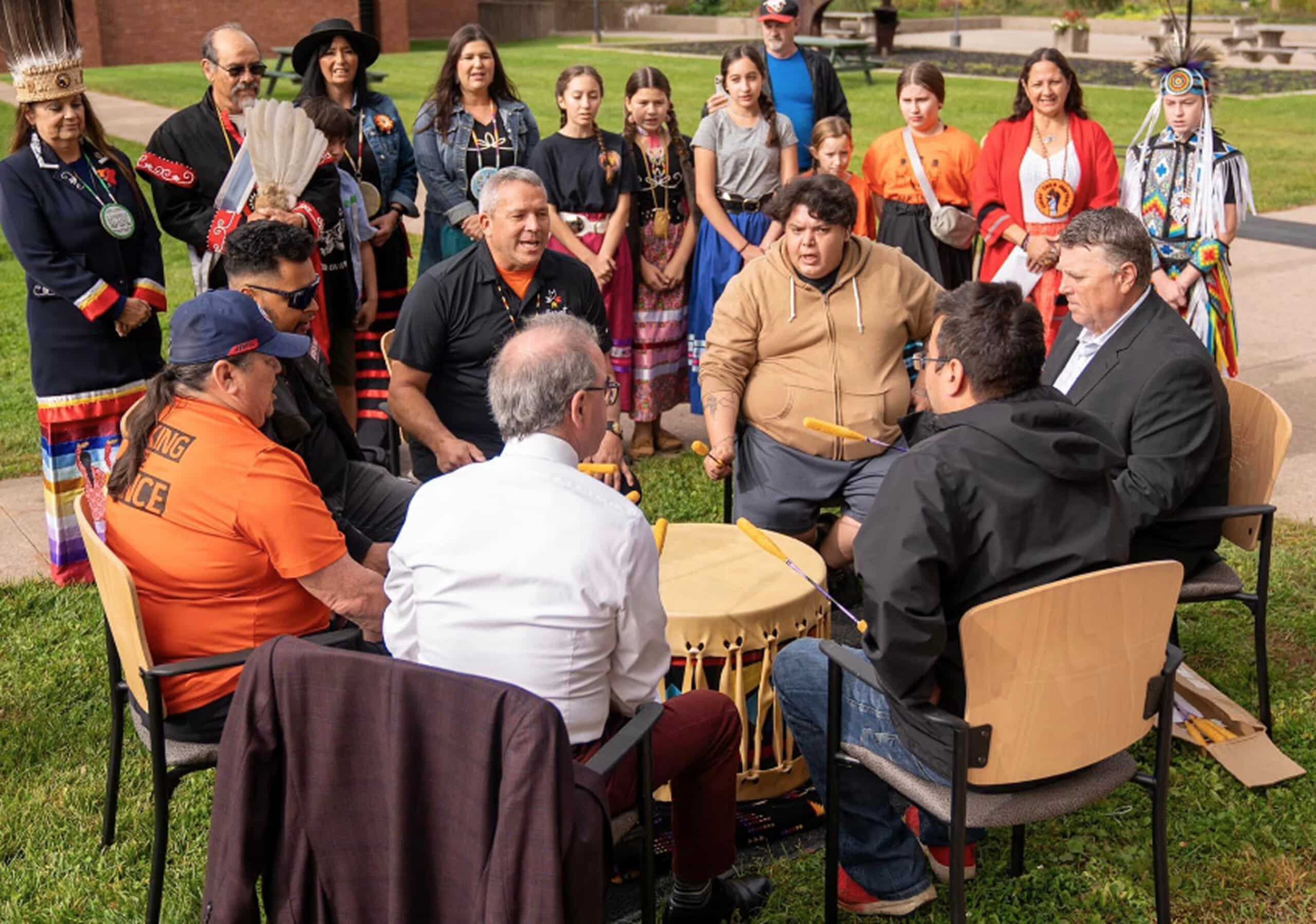
Housing is the foundation of Abegweit First Nation’s ambitious drive for a better future
Abegweit First Nation’s vision for a prosperous future is built on housing – high quality housing that brings citizens back home, drives economic activity, and boosts community well-being.
The Epekwitk [Prince Edward Island] Nation’s impressive housing projects are part of a transformative journey toward economic self-sufficiency and community empowerment.
Abegweit encompasses three communities on the island – Morell, Rocky Point, and Scotchfort – with close to 600 citizens. It’s a young population, with an average age of 26. And it’s a community firmly focused on the future.
“My philosophical view is that everything in the world brought us to where we are today, from residential schools to the colonial system, the courts,” says Chief Roderick “Junior” Gould. “But nothing’s going to determine tomorrow other than the decisions we make as a people, the decisions we make as a community.”
As the Nation advances towards a brighter future, Abegweit is working with the First Nations Financial Management Board (FMB) to enact various components of its Financial Administration Law (FAL) to ensure clear and fair processes at every step on the journey. It’s part of Abegweit’s commitment to transparency with its citizens and partners.
Looking back to 2019, overcrowding, with up to four families in one house, was a major problem at Abegweit. So the Nation’s leadership came up with a plan to resolve it; a plan that includes active community involvement and important economic benefits.
The federal government’s Rapid Homes Initiative looked like a good pathway to help get new housing built, but round one of the program prioritized modular homes, and Chief Gould saw the added benefits of building the homes themselves. He sat down with government officials to make the case and, in the end, persevered with his vision. With round one funding, the Nation built five new homes with its own construction team, creating new jobs and economic activity.
“The only way for us to be who we are in our fullest capacity is to have the understanding that we are in charge of our future,” he says of the Nation’s determination to do business on its own terms. “We are in charge of our own destiny.”
Over the past five years, Abegweit has constructed 22 homes. So far, 25 families have been able to return to the First Nation, growing its population and bringing in new skillsets that are vital to building prosperity and enhancing quality of life. Upcoming projects include construction of a new 22-lot subdivision, several multi-unit apartment complexes, and five passive solar homes.
Other economic drivers in the community include crab and lobster fishing. In season, the Nation’s fishery employs 40 citizens. As Chief Gould points out, fishing not only feeds his people, but also creates wealth.
“Economically and opportunity-wise, we have to create wealth; we have to teach our people how to fish and they will feed themselves forever.” The Nation also owns one of the most successful gas bars in Atlantic Canada.
Other upcoming projects include a large recreation centre that will also serve as a regional emergency centre.
Through enacting its FAL and other steps, Abegweit’s leadership is working with the FMB to advance their vision for the future.
“I think that what the FMB has shown to us is they understand the complexity and the different variables that each First Nation has,” says Chief Gould. The FMB “is going to be a really good vehicle to help us. They’re walking with us every step of the way.”
The FMB has assisted Abegweit to develop a clear assessment of the Nation’s needs, challenges, and potential solutions – all in a manner that was specifically tailored to the Nation’s unique community.
“The FMB has proven to me that they get it and it’s a tool in my tool belt to advance our mandate as a First Nation.”