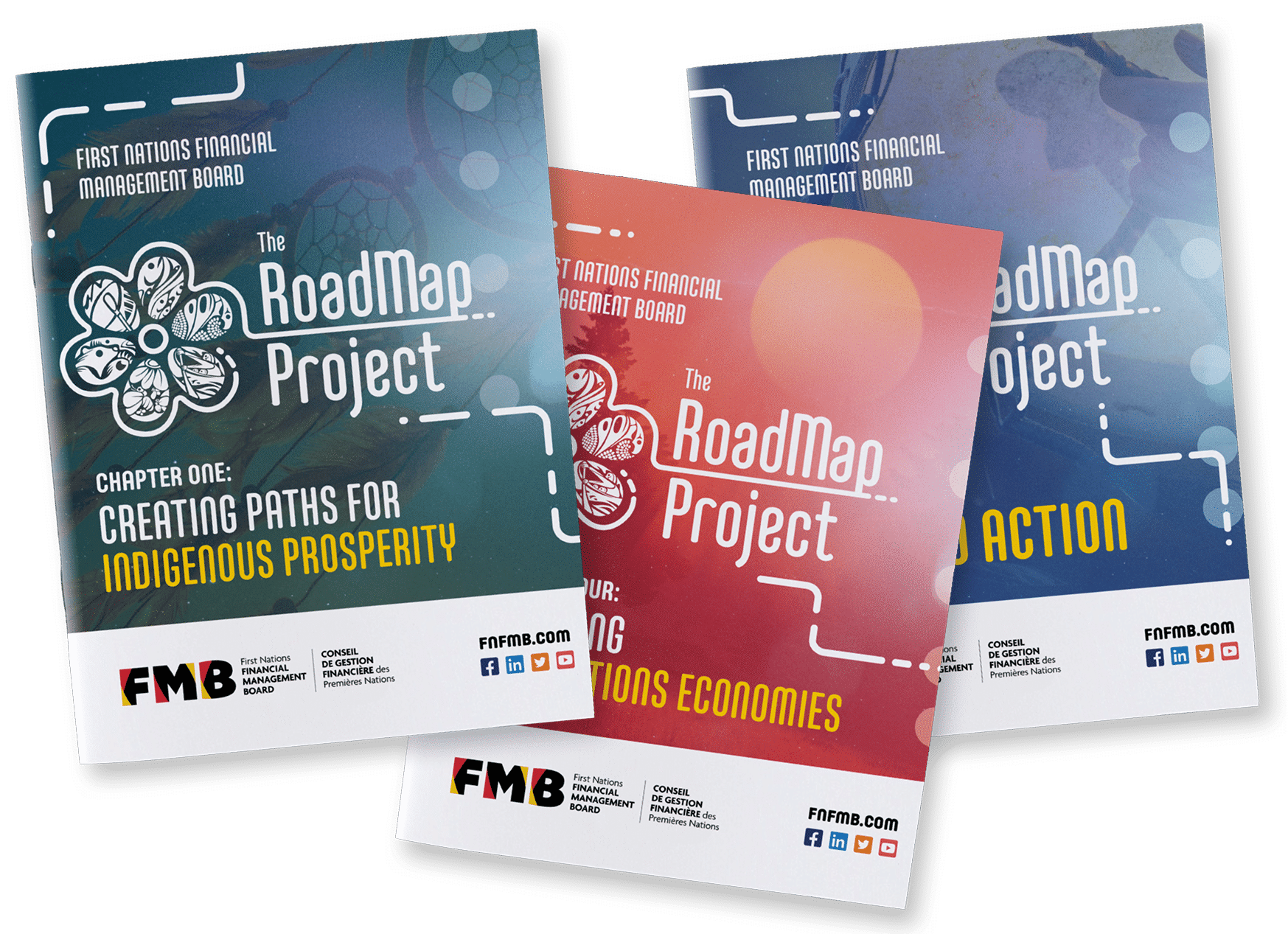

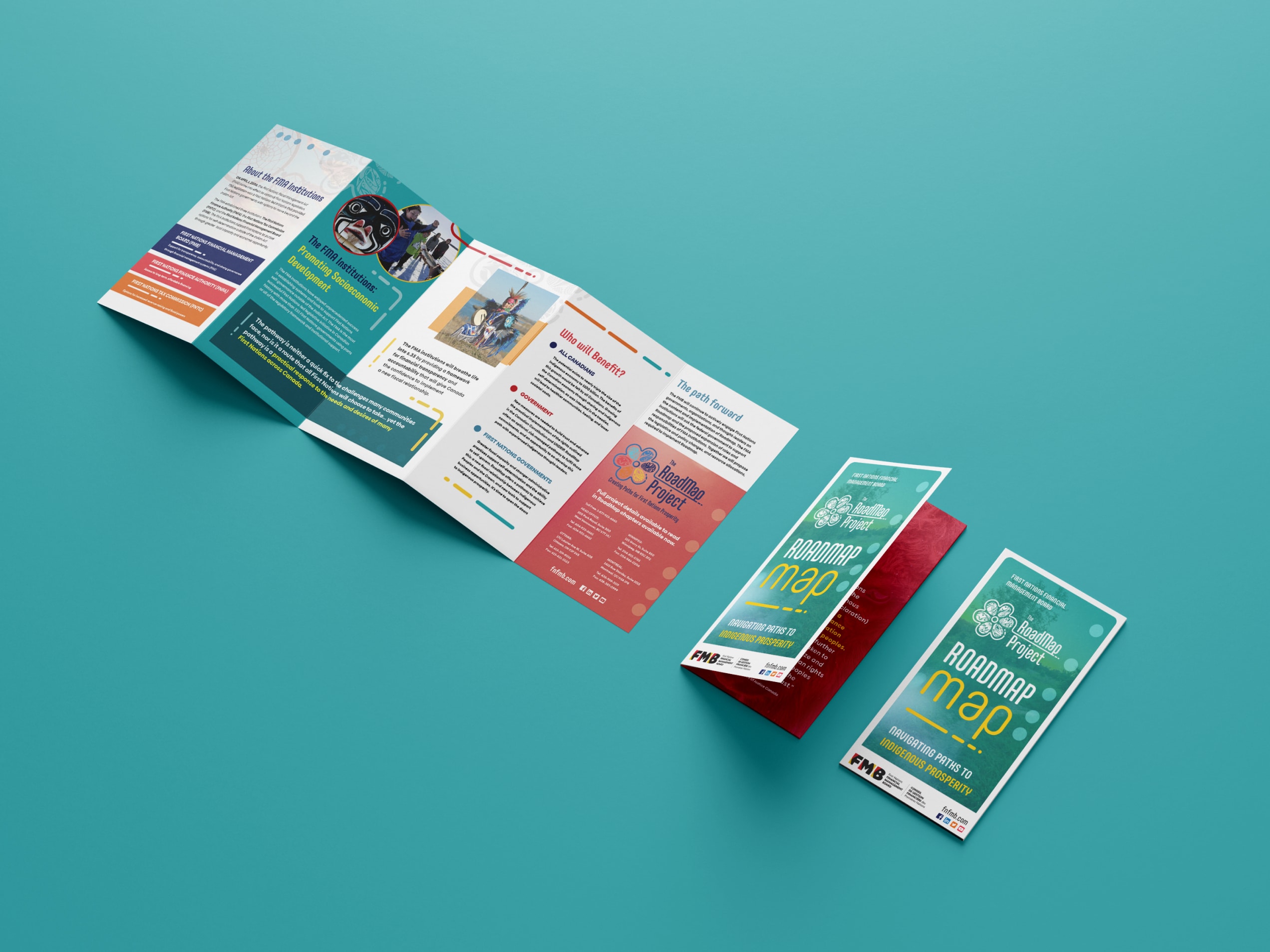
What is the RoadMap Project?
The RoadMap Project is a practical and implementable pathway to Indigenous economic reconciliation, consistent with the United Nations Declaration of the Rights of Indigenous Peoples (UNDRIP).
Informed by discussions with First Nations across Canada, RoadMap offers realistic and impactful options to empower First Nations governments in moving past the failed one-size-fits-all approach of the colonial system.
RoadMap is about creating new, optional paths for First Nations as they move from managing poverty to generating wealth. It’s an Indigenous-led plan for achieving economic prosperity and self determination for First Nations, while reducing risk for Canada.
The FMA institutions are the driving force behind this project. The FMA institutions have a proven track record of supporting First Nations as they grow their economies and enhance their financial and administrative .

The RoadMap Project will Empower:
- Informed policy decisions supported by statistics and data
- Better infrastructure through institutional support and improved access to capital
- Economic reconciliation through strong Indigenous economies
- Greater self-sufficiency through options to expand First Nations jurisdiction and fiscal powers
- Economies of scale and improved service delivery through First Nations working together
- Strengthened governance through capacity development and support from Indigenous Institutions

The Benefits of RoadMap Include:
- Practical pathways supporting First Nations self-sufficiency and economic growth
- Optionality that respects the rights of each First Nation
- Flexibility in pursuing these paths incrementally and at any pace
- Improved fiscal capacity to govern, while managing risk and increasing transparency and accountability
- Indigenous solutions that build on the earned trust and success of the FMA institutions
- Clarity among all levels of government on service responsibility and delivery

The FMB will:
- Continue to actively engage First Nations governments, organizations, and thought leaders in advancing RoadMap
- Ask the federal government to support RoadMap and its proposed expansion of the roles and responsibilities of FMA institutions
- Propose the legislative and policy changes and resource allocations required to implement RoadMap
The RoadMap Chapters


Indigenous Investment Commission
The Indigenous Investment Commission (IIC) is part of an optional solution needed to build brighter futures for Indigenous communities. As a new Indigenous-led institution, the IIC could provide asset management services to Indigenous governments, organizations, and trusts with the goal of:
- achieving higher returns and lower management fees,
- investing back into Indigenous communities, businesses, and Indigenous-led projects,
- ensuring a stronger Indigenous voice in corporate decision-making, and
- encouraging companies around the world to improve their relationship with Indigenous Peoples.
The Problem
Indigenous Peoples have assets to protect and grow for future generations. But when it comes to , we sometimes face barriers to growth, including poor returns and high management fees. Funds are often invested with companies whose objectives do not align with Indigenous values and do not reinvest in First Nations businesses and projects. This needs to change.
The Solution
Through a new Indigenous-led institution –the IIC– we would invest our communities’ financial wealth according to our own priorities, for the benefit of seven generations. While charging lower fees, the IIC would:
- balance generating optimal returns with supporting the economic, social, and environmental development of Indigenous communities;
- support Indigenous Peoples with integrity, and respect of Indigenous values; and
- foster Indigenous self-determination over our financial affairs and investment decisions.
Making the IIC a Reality
Work to establish the IIC has begun, and you’re invited to be a part of it!
Become a founding member: Together we can unlock new investment opportunities that align with your community’s values and long-term goals, creating lasting wealth for future generations. Become a founding member of the IIC and take control of your community’s financial future.
Be part of a transformative movement: Join a growing effort to empower Indigenous communities through collective financial strength.
If you would like to provide input, please take our survey.
Watch this Video: Quebec’s Quiet Revolution, 50 Years Later
Discover how Quebec in the early 1960s sought innovative ways to modernize Quebec, leading to the creation of the Caisse de dépôt. This revolutionary idea aimed to channel Quebecers’ savings to finance government projects and support local businesses, despite significant opposition. The IIC and Quebec’s Quiet Revolution share similarities in their goals of achieving economic self-determination for historically marginalized groups through institutional reforms and collective financial strength.
Indigenous Development Finance Organization
The lack of affordable capital is a major barrier to Indigenous economic development.
Without adequate capital, Indigenous businesses cannot grow. Major projects, including infrastructure development, cannot proceed.
Increasing access to credit will have a profound impact on Indigenous economic growth. The proposed Indigenous Development Finance Organization (IDFO) would fill the gap.
THE PROBLEM: Not Enough Capital for Indigenous Economic Growth
Indigenous communities, businesses, and entrepreneurs continue to face major barriers to loans and investment.
- most banks don’t understand Indigenous ways of doing business
- the Indian Act restricts how land and assets can be used
- Indigenous businesses receive less than one-tenth the capital available to others.
THE SOLUTION: The IDFO
The proposed IDFO is an Indigenous-led institution designed to back your Nation, your projects, and your future.
The IDFO will:
- take on more risk to help projects move forward
- provide flexible financing that aligns with Indigenous values
- build partnerships with existing financial institutions
- unlock opportunities that benefit all Indigenous people.
How will the IDFO help?
The IDFO will provide tools to help you succeed:
- loans for communities, entrepreneurs, businesses, and major projects
- risk-sharing and for harder-to-finance ideas
- grants for training, planning, and growing your financial skills
- equity and long-term investments for Nation-building.
How the IDFO is different (and complementary)
The IDFO will lift up the great work already happening with support from other Indigenous organizations.
We would work alongside them to:
- fill the gaps they can’t reach
- support riskier loans where others can’t
- help grow the whole Indigenous economy, together.
The Benefits
With the IDFO, Indigenous communities will have:
- more Indigenous-owned businesses
- healthier, more prosperous communities
- greater autonomy, pride, and control
- more jobs and better infrastructure
- a stronger future for our children and grandchildren.

Indigenous communities are open for business. More major projects will become a reality if Indigenous governments, businesses and entrepreneurs have access to financing comparable to that available to non-Indigenous entities.
Indigenous Economic Council
The FMB is working with like-minded partners to establish a permanent consortium of national Indigenous organizations (NIOs) to support Indigenous economic development and trade. The Indigenous Economic Council (IEC) continues to advance a shared vision for Indigenous economic growth and a strategy to guide federal policy and the activities of the NIOs. The IEC group has developed and shared an Economic Reconciliation Framework – a prioritized and actionable suite of policy initiatives to guide federal actions related to Indigenous economic development.
Historical and current structural barriers are holding back the growth and development of First Nations economies across Canada. These barriers include legislation that undermines the factors of production that support other sectors of the Canadian economy. These challenges create a complex economic environment for First Nations governments, businesses, and individuals. These factors combine to produce risk and uncertainty for businesses, entrepreneurs, and financing institutions, stifling growth and segregating First Nations economies from mainstream economies.
There is no single organization driving the conditions for First Nations economic development. Instead, a wide array of Indigenous institutions and organizations currently provide capacity support, tools, capital, and training to First Nations individuals, businesses, and governments across Canada. These organizations are part of a new framework for nation-building.
By working together for a common purpose through a secretariat, these NIOs can combine their strengths and experience to better support First Nations economies.
As a forum for Indigenous thought-leadership, the IEC will accomplish the following objectives.
- Identify opportunities and facilitate working together
- Support evidenced based decision making through research and statistics
- Coordinate advocacy for policy that promotes trade and investment and the removal of barriers
- Align the and activities of its members towards a common strategy
- Support Indigenous private sector growth
- Empower the Indigenous public sector innovation
- Support Indigenous businesses to engage with each other, external markets, and investors
- Promote efficiencies among member organizations
Statistical Initiative
Through the RoadMap Project’s Statistical Initiative, the FMB is developing the economic and fiscal statistical capacity to support evidence-based policy development to benefit First Nations Peoples and governments, their institutions, as well as federal, provincial, and territorial governments. The FMB has built a database and begun developing a Government Statistics portal, through which First Nations governments and institutions will be able to access their own data and see aggregated data. While still in development, the Statistical Initiative has already provided key insights into the realities faced by First Nations. Its continued development in the coming years will be instrumental in driving informed decision-making for First Nations governments.
Want to Learn More or Get Involved?
Join us on the RoadMap journey.
If you have any comments or questions regarding The RoadMap Project, or for more information on IDFO and IIC, please send us a message using the form.